
Table of Contents
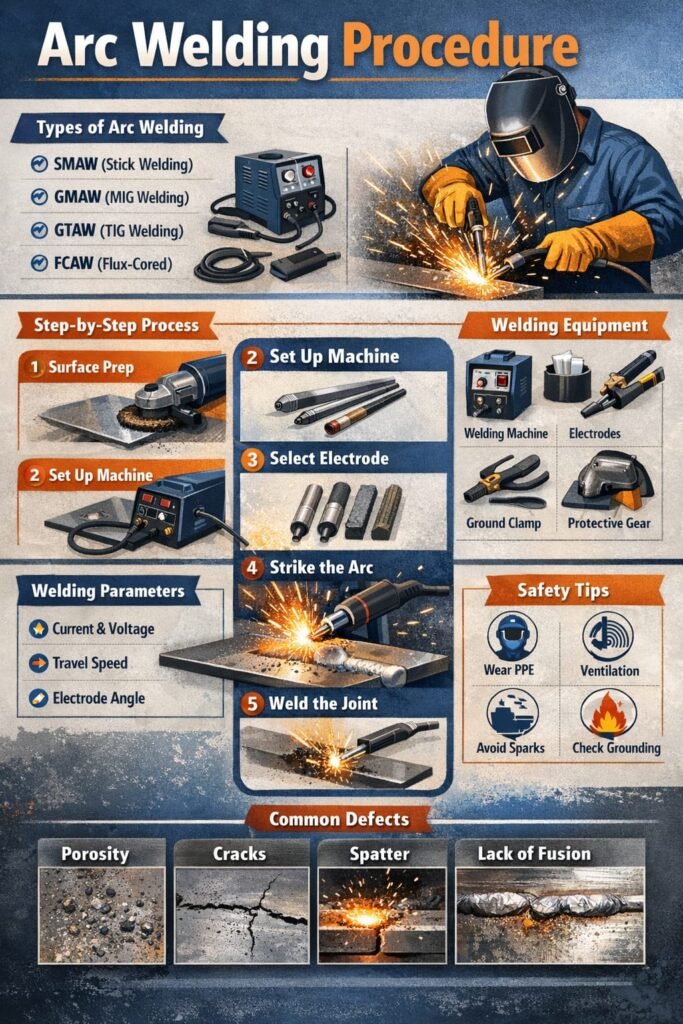
The arc welding procedure is a fundamental metal joining process employed in various industries, including construction, mining, power plants, and heavy equipment maintenance. The process of arc welding is described as follows: An electric arc is established between the electrode and the metal to be welded, producing heat to melt and join the materials.
A proper arc welding process is not just a metal joining process; it is also a process that guarantees the strength and safety of the final product. A poor arc welding process may result in weak structures and even accidents. Thus, it is important to understand all the steps of the arc welding process, not only for beginners but also for experienced technicians.
Introduction to Arc Welding
Arc welding is based on the principle of converting electrical energy into heat energy. The heat generated by the flow of electric current between the electrode and the workpiece creates an arc. The temperatures in an arc are around 6000 to 7000 degrees Celsius, which is enough to melt all the metals used in engineering.
One of the biggest advantages of using arc welding is that it can be applied to different metals, including steel, stainless steel, and cast iron. The process of arc welding is also widely accepted because it requires simple equipment and can be carried out in remote areas.
Each process is applicable to specific applications, and the choice of the process is an essential part of the arc welding process.
Shielded Metal Arc Welding (SMAW)
This is the most common and frequently used process. A flux-coated consumable electrode is used in this process. It protects the weld from contamination. This process is usually applicable to outdoor and repair work.
Gas Metal Arc Welding (GMAW / MIG)
This process involves the use of a continuous feed wire and shielding gas. This process is applicable in cases where faster and cleaner welds are required.
Gas Tungsten Arc Welding (GTAW / TIG)
This process is known for producing precise and clean welds. A non-consumable tungsten electrode is used in this process.
Flux-Cored Arc Welding (FCAW)
This process is similar to the MIG process but differs in the type of wire that is fed into the weld. A flux-filled wire is fed in this process. This process is applicable in cases where thick welds are required.
Equipment Required for Arc Welding
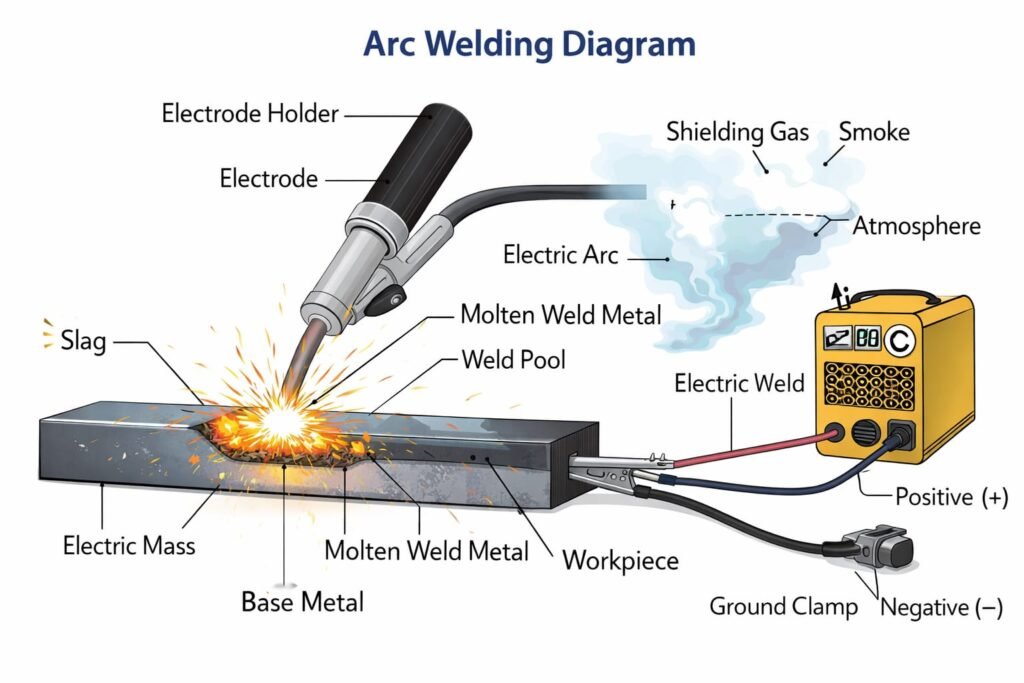
In order to conduct an effective arc welding procedure, it is important to have the right equipment. All these equipment play a significant role in the arc welding process:
Welding Machine (Power Source)
Provides the necessary current required to produce an arc.
Electrodes
These electrodes act as a filler material and also carry an electric current.
Electrode Holder
This holder holds the electrode and provides safety while manipulating it.
Work Clamp (Earth Clamp)
This clamp completes the electrical circuit by connecting it to the welding machine.
Welding Cables
These cables carry an electric current to the electrode holder and workpiece.
Chipping Hammer and Wire Brush
These two equipment are used to remove slag and clean up the weld beads.
Personal Protective Equipment (PPE)
Helmet, gloves, apron, safety shoes, etc., protect the welder from heat, sparks, and radiation.
The right equipment is used to conduct an effective arc welding procedure.
Step-by-Step Arc Welding Procedure
A systematic procedure for arc welding guarantees consistent and quality welds. Here is a step-by-step guide:
- Surface Preparation
The metal surface should be cleaned before welding. Remove any rust, oil, grease, and dust on the metal surface using a wire brush or a grinder.
- Machine Setup
Set up the welding machine according to the correct current and polarity, based on the type of electrode and metal thickness. This will help avoid poor penetration or spatters.
- Electrode Selection
Select the correct size and type of electrodes for welding. For instance, thicker materials require thicker electrodes and a higher current.
- Striking the Arc
To strike the arc, tap or scratch the electrode on the material to be welded. This process must be mastered to obtain a stable arc and prevent the electrode from sticking to the material.
- Maintaining Arc Length
A consistent arc length, normally the same as the electrode’s diameter, must be maintained. An overly long arc may result in spatters, and an overly short arc may result in sticking.
- Welding Movement
The electrode must move at a constant speed and at the proper angle, normally 10 to 15 degrees.
- Slag Removal and Inspection
After completing the welding process, the weld must be allowed to cool. Slag is then removed using a chipping hammer.
This complete arc welding process will result in stronger, better-looking, and more reliable welds.
Welding Parameters and Their Importance
One of the most important aspects in controlling parameters in arc welding is:
Current (Amperage)
An increase in current increases penetration but also increases the risk of burn-through if excessive.
Voltage
Influences arc stability and weld width.
Travel Speed
Excessive speed results in weak welds, while excessive buildup occurs at slow speeds.
Electrode Angle
The angle is important to obtain good fusion and smooth weld beads.
Safety Precautions in Arc Welding
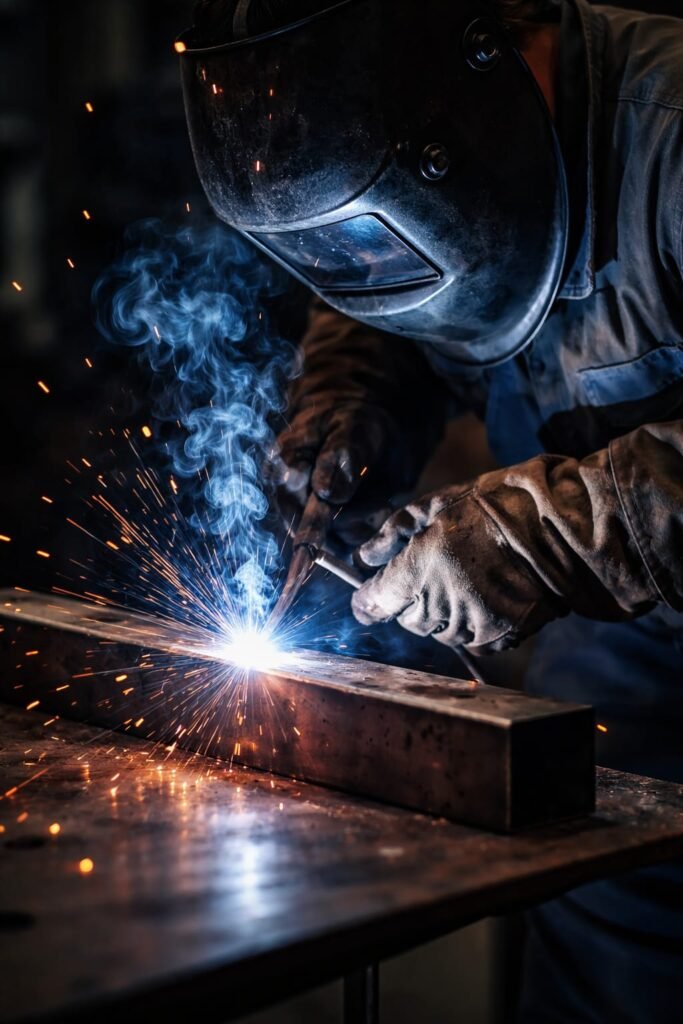
Safety should not be ignored in any arc welding process. Arc welding involves high temperature, electric current, and harmful radiation.
Always wear PPE like helmets, gloves, and clothing while performing arc welding
Use proper grounding to avoid electric shock while performing arc welding
Keep flammable materials away from the work area while performing arc welding
Ensure proper ventilation while performing arc welding to avoid inhaling harmful fumes
Never touch live electrical parts while performing arc welding
Common Arc Welding Defects and Solutions
Even if the arc welding procedure is followed, defects can still occur. The defects include:
Porosity
It is caused by moisture and contamination. The surface should be cleaned, and dry electrodes should be used.
Cracks
They are caused by high stress and fast rates of cooling. The heat input and the rate of cooling should be controlled.
Spatter
It is caused by high currents. The currents and arc length should be controlled.
Lack of fusion
It is caused by low heat and improper techniques. The currents and electrode angles should be increased.
Customer FAQ
Q1: What is the most important step in the arc welding process?
Surface preparation and parameter setting are the most important steps.
Q2: Can arc welding be done outdoors?
Yes, especially SMAW, which is best suited to outdoor conditions.
Q3: How do I select the electrode for the process?
Selection of electrodes depends on material, thickness, and position.
Q4: Why do defects occur in the welding process?
Defects occur due to improper settings, improper technique, and/or contaminants.
Q5: Is arc welding safe for beginners?
Yes, it is safe for beginners if proper training and safety measures are followed.